There are three types of skin cancers: melanoma and the two non-melanoma
skin cancers, basal cell carcinoma (BCC) and squamous cell carcinoma (SCC).
When the tumor forms from cells at the base of the epidermis, it is called
a basal cell carcinoma, and when the tumor forms from cells at the upper
layers of the epidermis, it is called a squamous cell carcinoma. Melanoma
is known as the most aggressive form of skin cancer and presents itself
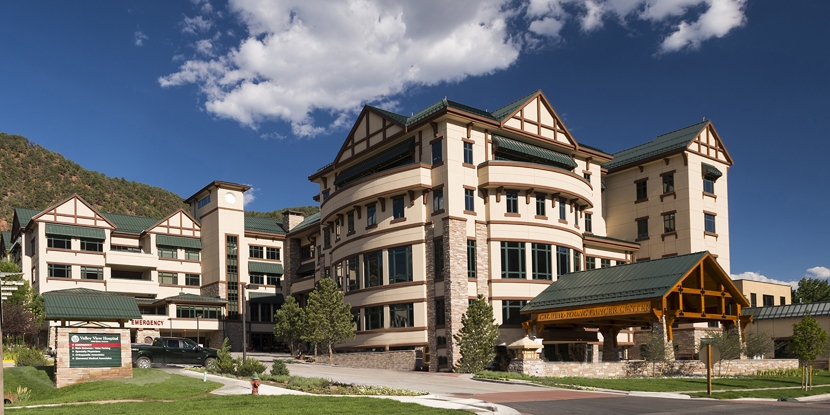
as a black or brown mole. Our seasoned cancer team at Calaway•Young
Cancer Center in Glenwood Springs, CO utilizes a multidisciplinary and
diverse research approach for the treatment of skin cancers to provide
the best care possible.
Causes
Skin cancers begin with abnormal growths of skin cells on areas that are
regularly exposed to direct sunlight, and can also develop on places that
are not ordinarily exposed to the sun. Skin cancers can develop after
years of extensive sun exposure or indoor tanning. Basically, there is
no such thing as a “safe” tan, and exposing your skin to harsh
UV rays can increase your risk of skin cancer. The best protection against
skin cancer is to minimize excessive sun exposure, wear sun-protective
clothing, use a broad-spectrum sunscreen, and avoid tanning beds.
Symptoms
The signs and symptoms of each type of skin cancer will vary, and it’s
important to educate yourself on the ABCDE rules:
A: Asymmetrical mole (one side is larger than the other)
B: Borders on the mole (a malignant mole will not have a defined, smooth border)
C: Color (a malignancy will be various colors throughout the mole)
D: Diameter (benign moles usually stay small, but malignancies will start
to spread out)
E: Evolving (cancer cells in a malignant mole will keep evolving and changing
the appearance of the skin)
Treatment Options
The treatment selected for your unique case will depend on the size, location,
depth, stage, and type of skin cancer.Calaway•Young Cancer Center offers several treatment options, including:
Surgical excision is used for smaller, easy-to-reach skin cancers. Typically,
a local anesthetic will be administered, but if a skin growth is larger
and in a more difficult location, general anesthesia might be required.
The cancer will be excised using a scalpel and horizontal cuts around
the growth and surrounding tissue. Small excisions can be sewn closed
while larger excisions may need a skin graft to close up the wound.
Electrodesiccation and curettage (ED&C) is an outpatient, nonsurgical
procedure that removes cancerous skin growths. This simple procedure treats
small lesions by scraping away the affected skin layer by layer. The procedure
gets rid of cancerous lesions on the skin, as well as growths that are
diagnosed as benign.
Cryotherapy utilizes liquid nitrogen to freeze the base and edges of the
target area. This can be an effective method for treating small areas
of skin cancer that are in the early stage of growth.
Radiation therapy uses high-powered energy to target cancer cells. We offer
varying types of radiation therapies, including photon therapy, which
uses focused light beams to treat cancer.
Topical chemotherapy cream may be used to treat your skin cancer, depending
on the type and its stage. This can be an effective option for many individuals,
but our team will perform a thorough assessment and biopsy to determine
if this is the best treatment option for you.
Protect Your Skin
The best practice is to protect your skin from over excessive sun exposure
and to use sunscreen when outdoors. This can help decrease your risk of
skin cancer and is an overall healthy habit. If you or your loved one
has been recently diagnosed with skin cancer or suspect a skin growth,
we invite you to call Calaway•Young Cancer Center. Our certified
cancer team is here to serve you and your family.