Common Causes of Back Pain in Younger Adults
- Category: Spine Center
- Posted On:
- Written By: Mason Wheatley
Signs you’re a Millennial: Gray hairs showing up? Check. Overly excited about your new vacuum? Check. One sneeze and suddenly your back hurts? Sadly, check.
Back pain isn’t just an older adult’s problem. It can affect people at many stages of life, including adults in their 30s and 40s, and interfere with quality of life.
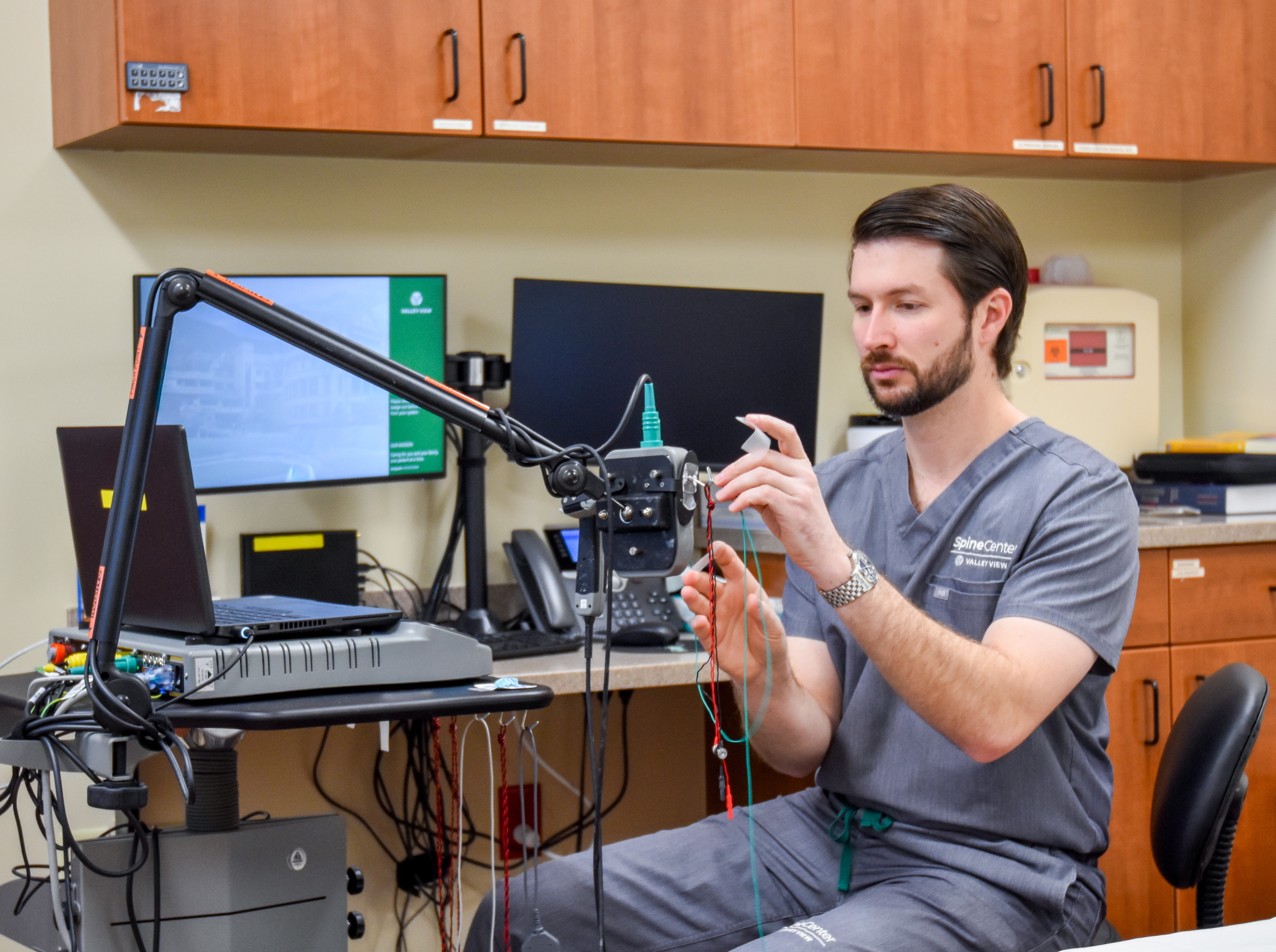
Caleb Seale, MD, physical medicine and interventional pain management physician at Valley View’s Spine Center, shares insight into common causes of back pain—and what can be done to manage or prevent it.
The Good News About Back Pain
For most people, back pain does not necessarily require an immediate trip to the doctor. Many cases improve with conservative care and some habit changes. Understanding the common causes of back pain is the first step towards prevention.
Common Causes of Back Pain
- Sitting Too Much
Between work, the commute and downtime, daily routines often involve long periods of sitting. Over time, this can lead to:
- Weakened core muscles
- Increased pressure on the spine
- Tightness in the hips and lower back
“When you sit for long periods, especially with poor posture, your core muscles stop doing their job,” Dr. Seale says. “That can put stress on your back and spine and potentially lead to pain or injury.”
- Too Much Screen Time
In the digital age, screens are hard to avoid. Spending long periods of time on phones and computers can encourage sedentary habits and poor posture, leading to strain in the neck, shoulders and back.
You may have heard the term “tech neck”—a strain and stiffness in the neck, shoulders and upper back caused by constantly looking down at phones or computer screens.
“When your head tilts forward to look at a screen, your neck muscles have to work harder to support it,” Dr. Seale explains. “Over time, that added strain can cause pain.”
- Improper Exercise Form
Regular exercise is one of the best things you can do for health—but poor form can do more harm than good to your back. Common mistakes include:
- Skipping warm-ups and jumping into workouts too quickly
- Lifting weights that are too heavy for you
- Failing to engage core muscles
- Using an improper range of motion, such as rounding, twisting or overextension
All of these errors may increase strain on muscles, joints and the spine.
Other factors
Stress, poor sleep and previous injuries may also play a role in back pain for some people.
Movement is Medicine
Contrary to popular belief, too much bed rest can make back pain worse and slow recovery, explains Dr. Seale. Instead, his philosophy is simple—keep moving.
“When it comes to back pain, movement is medicine,” Dr. Seale says. “I always encourage my patients to stay active whenever possible to support recovery and help prevent future problems.”
Gentle movement—such as walking and light stretching—can help reduce stiffness and pain while strengthening the muscles that support your spine. Activities that worsen pain should be avoided.
Tips for Back Pain Prevention
To help protect your spine and reduce risk of back pain throughout the day:
- Practice good posture when sitting and standing. Keep your spine aligned, shoulders relaxed and back, and core muscles engaged.
- For desk work, adjust your monitor to eye level, keep your feet flat on the floor, use lumbar support and keep your wrists neutral. Consider using a sit-to-stand desk to alternate your position throughout the day.
- Take regular breaks from your computer or phone to stand, stretch and move around.
Strengthen Your Core
Core strength builds the muscles that support your spine. There are safe, effective exercises you can do at home:
- Planks
- Side Planks
- Bird Dogs
- Glute Bridges
- Pelvic Tilts
- Modified Curl-Ups
Remember to always warm up with stretching prior to activity or exercise.
Heat, Ice and Stress Relief
- Use cold and heat therapy—cold can relieve inflammation, while heat can help with stiff and sore muscles.
- Activities like yoga, meditation and breathing exercises can reduce muscle tension.
Over-the-counter pain relievers like acetaminophen or ibuprofen may help relieve short-term back pain, but they work best when combined with the measures above.
Don’t Ignore Back Pain
Trying to push through back pain can turn a temporary problem into a chronic condition. Instead, view back pain as a signal to take steps now to prevent problems in the future.
You should see a doctor if your back pain:
- Lasts more than two weeks
- Is constant and intense, especially at night or in certain positions
- Includes numbness or tingling
- Disrupts your ability to work and sleep
- Is accompanied by fever, chills or unexplained weight loss
- Is accompanied by loss of bladder or bowel control
- Radiates down one or both legs
When your back pain won’t go away, Dr. Seale offers minimally invasive treatment options to address joint, muscle and nerve pain at Valley View’s Spine Center. But he’s hopeful that by following these tips, patients can help manage or prevent back pain before it becomes a bigger problem.
“Smart changes now can help protect your back in the long run,” Dr. Seale says.
To learn more about Valley View’s Spine Center, or to make an appointment with Dr. Seale, call 970.384.8060.