How to Stabilize Your Knees and Find Balance
- Category: Orthopedics, ValleyOrtho, Rehabilitation
- Posted On:
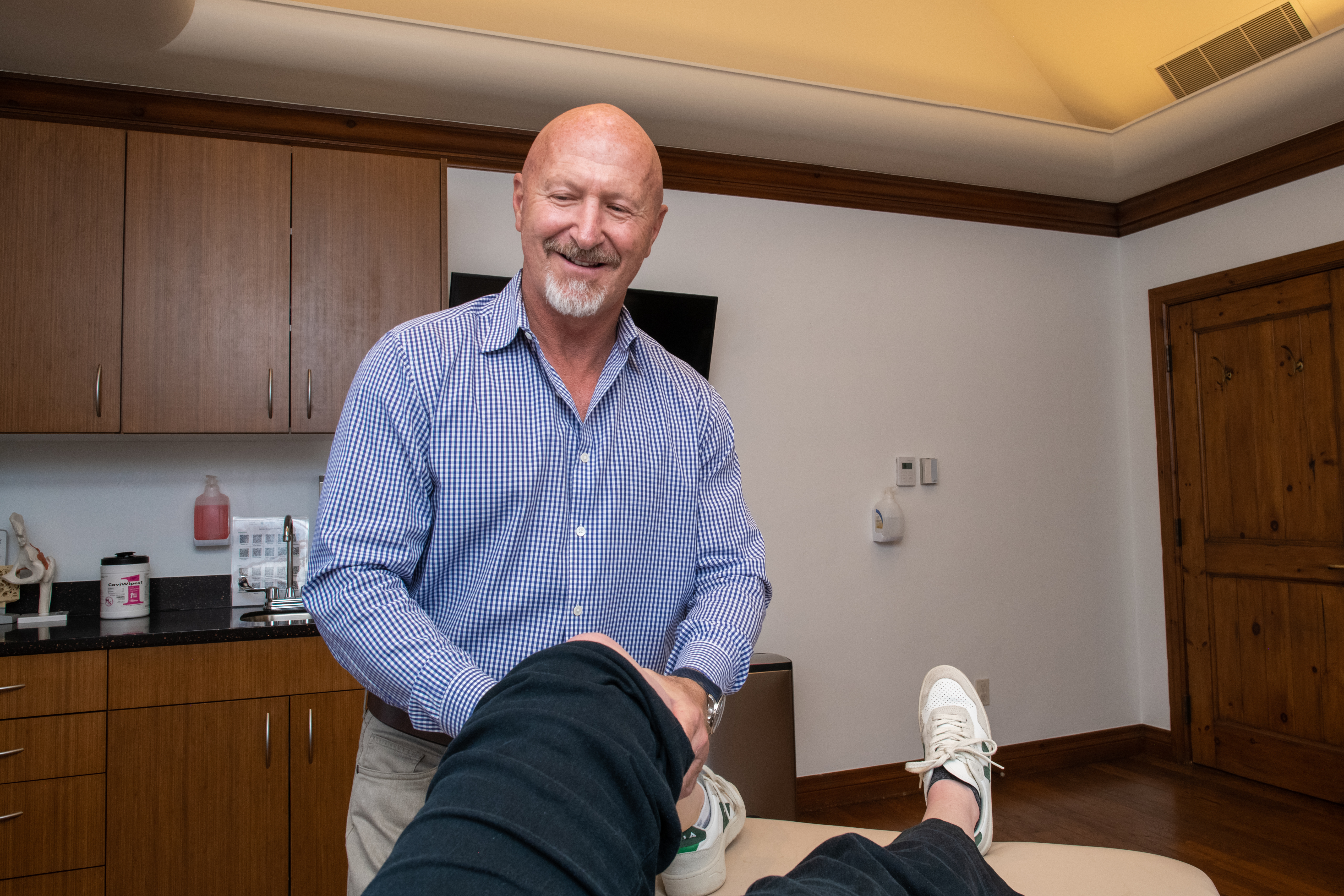
Our knees are a biomechanical marvel of bones, ligaments, cartilage, muscles and tendons working together. They allow us to walk, run, squat, ski and jump, all while supporting our body weight.
We require a lot from our knees, which is why they’re vulnerable to wear, tear and injury— especially when stability or balance is compromised.
In this Valley View University presentation, Physical Therapist Jessica McElroy, PT, DPT and Orthopedic Surgeon and Sports Medicine Specialist Tomas Pevny, MD provide expert guidance and demonstrate exercises to improve balance and knee stability.
Watch the full presentation here.
Stay tuned after the presentation for the Q&A session, where Dr. Pevny and Jessica discuss topics like Platelet-Rich Plasma (PRP) injections, cartilage regeneration and the BEAR procedure, a major advancement in ACL repair.
Here are some key takeaways.
What is Knee Stability and Why Does it Matter?
Knee stability keeps the joint aligned, supported and moving properly. A stable knee functions smoothly and is less likely to develop pain or injury.
Strong knee stability:
- Protects joint health
- Prevents injury
- Reduces chronic pain
- Lowers the risk of falls
- Supports mobility
If you like to run, ski, hike or play sports, knee stability is key. These activities involve movements—twists, turns, stops and high-force impacts—that place significant stress on the joint. Having stable knees will help keep the joint aligned and reduce strain on your body during activity.
The more active you are, the more important knee stability is to protect yourself and prevent injury.
Common Causes of Knee Instability and Imbalance
- Ligament injuries: Sprains and tears—especially to the ACL—are among the most common causes of knee instability in active adults.
- Meniscal injuries: Damage to the meniscus, whether from trauma or general wear-and-tear, can disrupt the knee’s stability and ability to absorb impact.
- Muscle weakness: Weak muscles provide less support to the joint, making it harder for the knee to maintain alignment.
- Poor proprioception: Proprioception is your body’s ability to sense its own position and movements, which is essential for stability and coordination. Having poor proprioception makes it easier to misstep, lose balance or overload the knee.
- Joint degeneration: Conditions like osteoarthritis weaken joints, contributing to instability.
Other risk factors for knee instability and imbalance include diabetes, obesity and neurological conditions like Parkinson’s Disease.
Exercises for Better Knee Stability and Balance
A combination ofbalance, strengthand functional movementtraining supports strong, healthy and stable knees. Here are some exercises that can be done safely at home.
Watch the exercise demonstration here.
Balance
- Feet together à semi-tandem à tandem
- Single leg stance
- Heel walking
- Toe walking
- Tandem walking (like a tightrope walker)
- Lateral walking (side-to-side)
Strength
- Sit-to-stand from chair à progress to lower surface
- Straight leg raises
- Long arc quads
- Hip abduction
- Heel raises
- Toe raises
- Mini squats
Functional Movement
Functional movement training focuses on everyday movements to support our daily activities. These include:
- Step-ups
- Stepping over obstacles of varying heights
When is it Time to See a Provider?
You should consider seeking medical help if you experience:
- Persistent knee pain or swelling that does not improve with rest or home care
- Repeated episodes of the knee giving out or feeling unstable
- Difficulty with daily movement, exercise or recreation
- No improvement after consistent home exercise routines
Seeking care for your knees early can help prevent further injury and guide you towards treatment that’s right for you.
How Physical Therapy Helps
Valley View’s team of highly skilled physical therapists create personalized plans to address muscle imbalances, stability issues and improper movement.
By addressing the root cause of knee instability, physical therapy can support quicker recovery, reduce pain and promote long-term knee health—so you can get back to the activities you enjoy.
Even as an orthopedic surgeon, Dr. Pevny often recommends physical therapy as a first line of treatment for patients before surgery is considered. “The good news is that most issues get better with physical therapy and don’t need operative treatment,” he says.
Ready to Seek Care?
Dr. Pevny is welcoming new patients at ValleyOrtho’s Aspen and Willits locations. He performs surgery in Basalt and Glenwood Springs.
Valley View offers physical therapy in six locations across the Roaring Fork Valley—making it easy to find care close to home. Schedule an appointment today at https://www.vvh.org/outpatient-rehabilitation/services/physical-therapy/.